Is Amazon Flex Worth It in 2026? Real Driver Experiences and What to Expect
Amazon Flex pays $18-$25/hour before expenses. Real drivers report $10-$20/hour after costs. See if this delivery gig fits your income goals.


Amazon Flex promises flexible hours and decent pay for anyone with a car and some free time. But is Amazon Flex worth it when gas prices, vehicle wear, and unpredictable routes are factored in? Drivers report earnings between $18 and $25 per hour before expenses, though some make more during peak times.
After costs like fuel and maintenance, take-home pay drops to roughly $10 to $20 per hour. Whether Amazon Flex makes sense depends on your vehicle, location, and how many hours per week you plan to drive.
What Is Amazon Flex?

Amazon Flex is adelivery program where independent contractors use their personal vehicles to deliver Amazon packages. The system runs through the Amazon Flex app, which lets drivers select delivery blocks ranging from two to six hours. When a block becomes available, drivers can claim it on a first-come, first-serve basis. Base pay starts at $18 to $25 per hour, though actual earnings vary based on route distance, package count, and surge pricing.
Unlike traditional delivery jobs with Amazon, Flex drivers aren't employees. They work as independent contractors, which means no health insurance, paid time off, or retirement contributions. Drivers cover their own fuel, vehicle maintenance, insurance, and taxes. The trade-off is schedule control. Drivers pick blocks when they want to work and pass on shifts that don't fit their schedule.
Amazon Flex operates differently from Amazon's Delivery Service Partners program, where drivers work for third-party companies using Amazon-branded vans. DSP drivers earn hourly wages with benefits and don't use personal vehicles. Flex drivers have more independence but shoulder all vehicle-related costs.
How Much Money Do Amazon Flex Drivers Really Make?
Amazon advertises $18 to $25 per hour for most Flex drivers. That number represents gross pay before expenses. Drivers who complete blocks faster than the allocated time still receive full payment for the block. A four-hour block paying $72 takes three hours to finish, which means $24 per hour. But that calculation ignores fuel, maintenance, and other costs.
Real-world earnings tell a different story. One driver calculated that a typical four-hour block at $72 cost $6 in gas and $32.50 in vehicle depreciation using the IRS mileage rate of $0.65 per mile. After expenses, net earnings dropped to $39.50, or $9.87 per hour. Another driver reported spending nearly as much on gas, repairs, and maintenance as total earnings.
Reddit drivers share mixed experiences. Some report making $1,200 to $1,400 weekly, though these figures don't always account for full expenses. Others say base pay blocks at $58 for three hours leave them with roughly $14 per hour after gas and other costs. Drivers in markets with higher surge pricing see better returns, especially during holidays or bad weather.
Amazon Fresh and Whole Foods deliveries offer better earning potential because customers tip. One driver noted making $90 on a block with a $44 to $58 base after tips. Tips aren't guaranteed for standard warehouse deliveries, which limits income from those blocks.
Location significantly affects pay. Drivers in dense urban areas complete deliveries faster because stops cluster together. Rural routes require more driving between stops, which burns fuel and extends delivery time without extra compensation. One driver mentioned a 140-mile round trip for a single block, making the route unprofitable after gas costs.
Drivers calculate real hourly rates by tracking miles driven, fuel costs, and time spent waiting at warehouses or dealing with undeliverable packages. Gas prices directly impact profitability. When fuel costs spike, drivers making $18 per hour before expenses might net closer to $11 per hour.
Amazon Flex Expenses: What Costs Eat Into Earnings

Independent contractors pay for everything Amazon doesn't. Fuel tops the expense list. Drivers report spending $20 to $40 per block on gas depending on route distance and vehicle fuel efficiency. A driver covering 70 to 100 miles per shift uses five to seven gallons of gas. At $3 per gallon, that's $15 to $21 per block in fuel alone.
Vehicle maintenance adds up quickly. Drivers doing Flex regularly need oil changes, tire rotations, brake replacements, and other repairs more often than casual drivers. One driver listed approximate monthly expenses of $90 for tires, $70 for oil changes, $40 for tune-ups, plus $380 for vehicle payments and $280 for full-coverage insurance. These costs totaled nearly $900 monthly before fuel.
Drivers can deduct business expenses at tax time using either the standard mileage rate or actual expense method. The IRS mileage rate for 2026 is $0.67 per mile. Tracking mileage lets drivers reduce taxable income, though it doesn't return money directly. If a driver earns $500 and has $200 in expenses, they pay taxes on $300, not $500.
What About Other Costs?
Insurance requirements vary by state, but Amazon mandates drivers carry personal vehicle coverage meeting local minimums. Some states require additional commercial coverage for delivery driving. Amazon provides commercial auto insurance during active deliveries, though gaps exist between accepting blocks and starting deliveries.
Phone data usage, car washes, and parking fees add smaller costs. Drivers delivering in bad weather or unfamiliar areas spend unpaid time navigating or waiting out storms. Time spent loading packages, waiting for route assignments, and returning undeliverable items doesn't count toward paid block hours.
Vehicle depreciation matters more for drivers logging high mileage. Cars lose value faster when used for commercial purposes. A vehicle driven 100 miles daily for Flex wears out quicker than one used for occasional errands. Resale value drops accordingly.
Pros of Driving for Amazon Flex
Here are the pros of driving for Amazon Flex as a driver:
Schedule flexibility ranks as the biggest advantage
Drivers choose when to work and take time off without approval from supervisors. This appeals to students, parents, freelancers, and anyone juggling multiple commitments. Drivers working around full-time jobs or other gigs pick blocks that fit their availability.
Predictable pay makes planning easier
Drivers see exactly how much a block pays before accepting it. Unlike rideshare or food delivery apps where earnings fluctuate based on tips and order volume, Amazon Flex guarantees a set amount for each block. Drivers finishing early still earn the full block rate.
Fast payment helps with cash flow
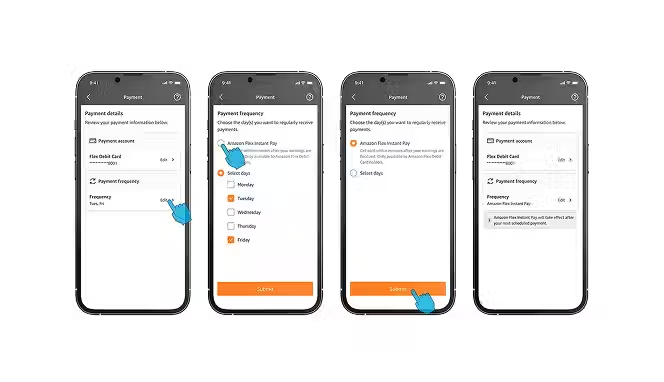
Amazon pays drivers twice weekly, typically Tuesdays and Fridays. Instant payout options let drivers access earnings faster for a small fee. This matters for people using Flex to cover immediate expenses rather than long-term savings.
Surge pricing during peak times boosts income
Base rates increase when demand exceeds driver supply. Drivers report seeing blocks jump from $54 for three hours to $75 or higher. Holiday periods, bad weather, and weekend rushes trigger surges. One driver noted rates reaching $35 to $45 per hour during peak times.
Amazon Flex Rewards program offers perks for regular drivers
Drivers earn points for completed deliveries and blocks, redeemable for fuel discounts, vehicle maintenance savings, and preferred scheduling. Fuel discounts through the Flex debit card save drivers money on gas purchases. Cashback rates reach up to 12% on fuel with the rewards card.
No customer interaction simplifies deliveries
Drivers drop packages at doors without waiting for customers or handling complaints directly. This suits people who prefer working independently rather than managing customer service issues common with rideshare or food delivery.
Cons of Driving for Amazon Flex
Now here are the downsides you should watch out for. The cons of driving for Amazon Flex:
Vehicle wear and tear accumulates fast
Constant stopping, starting, and driving over varied terrain damages brakes, tires, and suspension. One driver needed new brakes after eight months of Flex driving. Rural routes with unpaved roads increase maintenance needs.
No employee benefits
Drivers need to cover health insurance, retirement savings, and emergency expenses themselves. As independent contractors, Flex drivers receive no paid sick leave, vacation time, or workers compensation. Medical emergencies or injuries on the job create financial strain without employer support.
Physical demands surprise some drivers
Carrying packages, climbing stairs, navigating apartment complexes, and delivering in extreme weather tires people out. Heavy packages require lifting and moving without assistance. Drivers delivering 40 to 50 stops per block spend hours on their feet.
Route unpredictability creates frustration
Drivers don't know where they're delivering until accepting a block and arriving at the warehouse. Some routes keep drivers close to the warehouse with clustered stops. Others send drivers 30 to 60 minutes away for scattered deliveries. Long drives to the first stop eat into block time and increase fuel costs.
Block availability fluctuates based on demand
Drivers in oversaturated markets struggle finding blocks at acceptable rates. When too many drivers chase too few blocks, surge pricing disappears and base rates dominate. Some drivers refresh the app constantly hoping to grab blocks before others claim them.
Amazon's route assignments don't always make sense
The app sometimes directs drivers past one delivery to complete stops miles away before circling back. Inefficient routing wastes time, gas, and driver patience. Drivers can't manually adjust routes to optimize delivery order.
Weather conditions make deliveries harder
Rain, snow, ice, and extreme heat add physical strain and safety risks. Drivers delivering during storms face slippery roads, poor visibility, and customers who don't answer doors. Packages left in bad weather get damaged, leading to customer complaints.
Amazon monitors delivery performance closely
Late deliveries, missed deliveries, and low ratings affect driver standing. Drivers who consistently underperform risk deactivation from the platform. Traffic delays, access code issues, and incorrect addresses cause late deliveries beyond driver control.
Amazon Flex vs Other Gig Jobs: How Does It Compare?
Amazon Flex differs from DoorDash, Uber Eats, and Instacart in structure and pay. DoorDash and Uber Eats let drivers work whenever they want without scheduling blocks in advance. Flex requires committing to specific time blocks, reducing spontaneity. DoorDash drivers earn per order with variable pay based on distance, tips, and peak pay. Flex drivers earn fixed block rates regardless of delivery count.
Customers routinely tip food delivery drivers 15% to 20% of order totals. Amazon Flex deliveries from warehouses don't include tips, though Fresh and Whole Foods orders do. Drivers relying on tips for income prefer food delivery apps over standard Flex blocks.
Amazon Flex vs DoorDash
DoorDash has lower vehicle requirements than Amazon Flex. Dashers can use any car, even two-door vehicles or older models in poor condition. Amazon Flex requires four-door sedans, vans, or trucks in good working order. Dashers in some markets deliver by bike or scooter, options unavailable with Flex.
Amazon Flex vs Uber and Lyft
Uber and Lyft involve passenger interaction, which some drivers enjoy and others avoid. Amazon Flex appeals to people who prefer working independently without managing customers during deliveries. Rideshare drivers deal with drunk passengers, poor ratings from riders, and constant conversation. Flex drivers interact minimally with customers.
Amazon Flex vs Instacart
Instacart combines shopping and delivery, adding time and effort compared to Flex. Instacart shoppers spend 30 to 60 minutes in stores selecting groceries before delivering them. Amazon Flex drivers pick up pre-packed orders and focus solely on delivery. Instacart tips can boost earnings significantly, though shopping time reduces effective hourly rates.
Amazon Flex pays more consistently than many gig apps when comparing guaranteed hourly rates. DoorDash and Uber Eats earnings swing wildly based on order volume, time of day, and tips received. Flex drivers know their earnings before starting, which helps with budgeting.
Legal Issues with Amazon Flex Driver Classification
Amazon faces lawsuits and arbitration claims over classifying Flex drivers as independent contractors instead of employees. Thousands of current and former drivers in California, Illinois, Massachusetts, Virginia, and New Jersey argue Amazon misclassifies them to avoid paying overtime, minimum wage, and expense reimbursements.
The ABC Test used in these states presumes workers are employees unless employers prove three conditions. Workers must be free from employer control, perform work outside the company's usual business, and operate independent businesses. Drivers argue Amazon fails all three tests because the company controls routes, sets pay, monitors performance, and provides the delivery app.
Virginia courts ruled that Amazon Flex drivers qualify as employees for unemployment insurance purposes. The Virginia Employment Commission determined Amazon exerted significant control over drivers, triggering employer tax obligations. Amazon appealed multiple times but lost at every level.
New Jersey sued Amazon in October 2025, alleging Flex driver misclassification violated state labor laws. The lawsuit claims Amazon shifts business costs to drivers while maintaining control over their work through the app. New Jersey seeks unpaid wages, benefits, penalties, and contributions to state unemployment and disability funds.
Over 32,000 arbitration claims have been filed with the American Arbitration Association by drivers in multiple states. Drivers demand back wages, overtime pay, expense reimbursements, and other benefits owed to employees. Amazon's independent contractor agreement requires disputes go to arbitration rather than class-action lawsuits.
The legal battles highlight tension between flexibility and worker protections. Amazon claims independent contractor status lets drivers choose their schedules freely. Drivers counter that Amazon's control over pay, routes, and performance metrics mirrors employment relationships.
These lawsuits don't affect drivers' ability to work for Flex currently. Cases proceed slowly through courts and arbitration. Outcomes could force Amazon to reclassify drivers as employees, increasing costs and potentially reducing schedule flexibility.
Tips for Maximizing Amazon Flex Earnings
Now, if you still want to join Amazon Flex as a driver and make good money, here’s what we recommend:
Track expenses meticulously
Record fuel costs, mileage, maintenance, and other spending tied to Flex work. This data reveals which blocks and routes generate actual profit versus just gross pay. Use mileage tracking apps to automate record-keeping for tax deductions.
Choose fuel-efficient vehicles to minimize gas costs
Driving a car that gets 30 miles per gallon costs half as much in fuel as one getting 15 miles per gallon. Smaller sedans work better than trucks or SUVs for reducing fuel expenses.
Wait for surge pricing rather than accepting base pay blocks
Blocks sitting unclaimed often increase in pay as start times approach. Drivers report rates jumping $10 to $20 per hour when Amazon struggles filling shifts. Patience pays off, though waiting risks someone else claiming the block.
Work early morning shifts for better routes and higher pay
Blocks starting between 3 AM and 7 AM often surge because fewer drivers work those hours. Early routes also avoid traffic congestion, reducing delivery time and fuel consumption.
Use the Amazon Flex Rewards program to earn fuel discounts and preferred scheduling
Complete deliveries consistently to accumulate points redeemable for cashback on gas and vehicle services. Higher reward tiers unlock preferred scheduling, letting drivers reserve favorite blocks before others see them.
Keep an eye on social media groups and forums
Reddit and Facebook groups for Amazon Flex drivers share information about surge pricing patterns, problematic routes, and warehouse-specific quirks. Learning from experienced drivers in your market helps avoid mistakes.
Combine Amazon Flex with other gig apps
Drive for DoorDash or Uber Eats during hours when Flex blocks aren't available. Multi-apping increases total earnings and reduces idle time between gigs.
Study offer pages on days off to identify surge patterns
Watch how block rates change in the hours before start times without accepting blocks. This reveals when and which routes surge most often, informing future scheduling decisions.
Organize packages efficiently to speed up deliveries
Group stops by the area and arrange packages in delivery order before leaving the warehouse. Faster deliveries let drivers finish blocks early and return home with full pay.
Choose blocks with Amazon Fresh or Whole Foods deliveries when possible
These blocks include tips on top of base pay, increasing total earnings. Tips from grocery deliveries can add $20 to $40 to block payments.
Is Amazon Flex Worth It? Who Should Try It
Amazon Flex makes sense for people wanting flexible side income without fixed schedules. Students, parents, freelancers, and anyone with irregular availability benefit from choosing their own work hours. Part-time drivers adding 10 to 20 hours weekly can earn $500 to $1,000 monthly depending on market rates.
Skip Amazon Flex if consistent full-time income with benefits is needed.
The lack of health insurance, paid time off, and retirement contributions makes Flex unsuitable as a primary income source long-term. People depending on steady paychecks struggle with variable block availability and unpredictable earnings.
Drivers with fuel-efficient, reliable vehicles paid off or nearly paid off see better returns
High monthly vehicle payments or expensive maintenance on older cars eats profits quickly. Leasing a vehicle for Flex rarely makes financial sense because mileage limits and wear penalties exceed earnings.
People living near Amazon warehouses in areas with dense delivery zones profit most
Short drives to warehouses and clustered delivery stops reduce fuel costs and time per block. Drivers commuting 30 minutes to warehouses or delivering in spread-out rural areas spend more on gas and time.
Physical fitness is a must if you become an Amazon Flex driver
Drivers comfortable lifting packages, climbing stairs, and walking extensively for hours handle the work better. Back problems, knee issues, or limited mobility make package delivery challenging.
Try Amazon Flex if looking for easy entry into gig work
The application process takes days, not weeks, and requires minimal qualifications beyond age, license, vehicle, and background check. New drivers start earning within a week of approval.
Avoid Flex if vehicle expenses would exceed earnings potential. Run calculations using your car's fuel economy, typical gas prices, and estimated miles per block. If costs leave less than minimum wage after taxes, the work doesn't make financial sense.
Why Combine Amazon Flex with Spocket Dropshipping?
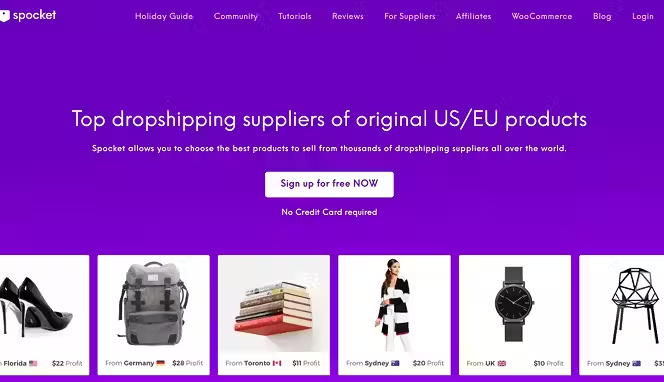
Amazon Flex pairs well with platforms like Spocket for entrepreneurs building online businesses while earning side income. Spocket connects dropshippers with over 100 million winning products from verified US and EU suppliers. The platform offers automated inventory management, one-click product imports, branded invoicing, and print-on-demand customization.
Over 500,000 entrepreneurs worldwide trust Spocket for dropshipping, and the platform integrates with WooCommerce, Wix, and others. Spocket provides a seven-day free trial on dropshipping plans with 24/7 VIP customer support, no minimum order quantities, and sample ordering capabilities.
Using Amazon Flex for immediate cash flow while building a Spocket dropshipping store creates dual income streams that balance stability with growth potential.
Conclusion
Amazon Flex offers genuine flexibility and decent hourly rates for people seeking side income on their own schedule. The platform works best for drivers with fuel-efficient vehicles living near warehouses in areas with dense delivery zones. Earnings range from $18 to $25 per hour before expenses, though surge pricing and tips can boost income during peak times. After accounting for gas, maintenance, taxes, and vehicle wear, real take-home pay drops to $10 to $20 per hour. Whether Amazon Flex is worth it depends on your financial needs, vehicle costs, and how much you value schedule control over stable employment benefits.
Do you want to try Amazon dropshipping? Use Spocket!
Start your dropshipping business today
Is Amazon Flex Worth It? FAQs
Can I work Amazon Flex part-time while keeping my full-time job?
Yes, Amazon Flex works well as a part-time gig alongside full-time employment. Drivers choose delivery blocks that fit around work schedules, weekends, or evenings. Many Flex drivers use the platform for extra income rather than primary earnings. Just ensure blocks don't conflict with your main job hours and that physical demands don't interfere with job performance or sleep.
How long does the Amazon Flex background check take and what disqualifies applicants?
Amazon Flex background checks typically complete within two to fourteen days, though some take longer for common names or multi-state records. The check reviews driving history, criminal records, and identity verification. Major driving violations, recent accidents, felonies, theft charges, fraud convictions, and sex offender registry status can disqualify applicants. Minor infractions from years ago usually don't prevent approval.
Do Amazon Flex drivers get any insurance coverage while delivering packages?
Amazon provides commercial auto insurance covering drivers during active deliveries in most states. This coverage protects drivers while on routes between picking up packages and completing deliveries. Personal auto insurance remains required and covers drivers traveling to warehouses and when not actively delivering. Check your state's requirements, as some mandate additional commercial coverage for delivery work.
What happens if I can't complete my Amazon Flex delivery block on time?
You should complete all deliveries within the allocated block time. If unable to finish due to traffic, access issues, or other problems, contact Amazon support through the app. Late completions affect your delivery performance ratings. Consistently late or incomplete blocks can lead to deactivation. Return undeliverable packages to the warehouse rather than abandoning them.
Are tips included in Amazon Flex earnings for all delivery types?
No, tips only apply to Amazon Fresh, Whole Foods, and Prime Now deliveries where customers can add gratuities. Standard warehouse package deliveries don't include tips, so earnings come solely from the guaranteed block rate. Fresh and Whole Foods blocks show estimated earnings including average tips, though actual tip amounts vary by customer generosity and order size.
Can I bring passengers or pets with me while doing Amazon Flex deliveries?
Amazon Flex policies allow passengers and pets in your vehicle as long as they don't interfere with deliveries or package safety. Passengers can't help with deliveries but can accompany drivers. Pets must remain secured in the vehicle and can't accompany drivers to customers' doors. Ensure your vehicle has enough space for passengers, pets, and all packages assigned to your route.


Launch your dropshipping business now!
Start free trial.avif)


Related blogs
How to Set Up Automated Order Fulfillment With Spocket and Shopify
Set up a smoother Shopify dropshipping workflow with Spocket by connecting your store, importing products, processing orders, syncing tracking, and reducing manual fulfillment tasks.


How to Open a Business Bank Account for Your Dropshipping Store
Set up your dropshipping finances the right way with a dedicated business bank account built for payouts, supplier payments, taxes, and long-term store growth.
Spocket vs Dropified: Which Tool Is Better for Multi-Store Scaling?
Compare Spocket and Dropified for multi-store dropshipping, supplier quality, automation, fulfillment, product sourcing, and scaling across ecommerce platforms.