Wondering what this whole dropshipping thing is? Or, are you looking to start a small online business, and you've heard the phrase dropshipping here and there?
Either way, you're in the right place.
In this article, we'll clarify what dropshipping is and how it works. We’ll cover the highs and the lows, as well as how you can get started as soon as...today.
There's lots to cover, so we'll dive right in!
What is Dropshipping?
What is dropshipping and how does it work? Well, dropshipping is an e-commerce fulfillment model where you don't hold any inventory and sell products online. The customer will make a purchase from your storefront from a third-party supplier who will then ship the product directly from them. You will be the middle-man and this model will let you run an online business with low startup costs. Your focus will be mainly on marketing and sales while your supplier (or manufacturer/wholesaler) will handle packaging, warehousing, and shipping.
How Does Dropshipping Work?
Are you asking yourself how does dropshipping work and you are looking for a simple answer? Then we have one for you: It's basically a supply chain business model where you use networks of suppliers, materials, manufacturers, and retailers to create and distribute products. You cover everything in the business: from production to customer delivery, except you don't directly handle the production process.
Typically, dropshipping will involve:
- Your manufacturers will create your products, but they won't sell it to the public. They will, however, sell it in bulk to retailers, wholesalers instead.
- Wholesalers can buy products from manufacturers and mark them up before selling on to retailers. They can stock products from multiple manufacturers.
- Retailers can directly sell products to the public at mark up prices.
Now here is how dropshipping works:
The dropshipping partner will ship your order to the customer and pay a commission fee to you. The more your profits are, the less of a cut you have to take.
Pros and Cons of Dropshipping
Like most things in life, dropshipping isn't without both its pros and cons. Let's cover the good and the bad, so you can get a better idea of what you're getting into.
Pros of Dropshipping
Let's start with the pros of dropshipping:
- It's incredibly cheap to get started with. Unlike a traditional store, you don't have to invest thousands of dollars into inventory, warehousing, staff, etc., to launch your business. So there's way less risk associated with the dropshipping business model.
- Logistically, it's easier for newbies. You don't have to organize or pay for warehousing, packing, shipping, returns, or manage stock levels. As such, there's way less to think about!
- Low overheads. Your overheads remain relatively low (even when scaling your business), as you only need a laptop and a few recurring subscriptions to run your store (Shopify, Spocket, etc.)
- Location freedom. Providing you can get an internet connection, you can run your dropshipping business from anywhere.
Cons of Dropshipping
Now, here are the cons of dropshipping for all:
- (Potentially) Low-profit margins. In some niches, fierce competition has forced merchants to slash their prices to the bone to remain competitive. However, this isn't true of all niches, or even of all products within a niche. Rather, it just means you need to do some digging to ensure you pick a profitable niche from the get-go.
- Inventory issues. Depending on your supplier, inventory levels can fluctuate daily, so you'll need to keep track of that to avoid selling out of stock products.
- Supplier mess-ups. You're responsible for the failures of your suppliers. Even the highest quality vendors screw up every now and again. In these instances, you'll have to shoulder the responsibility and apologize to your customers.
- Lack of branding. It's hard to brand your products and packaging. Typically, the product(s) you're dropshipping are designed and branded by the supplier. Consequently, you don't have much control over its branding.
How to Start Dropshipping for Free
You can start dropshipping for free by focusing on organic marketing via YouTube, Instagram and TikTok. There are free trials you can use on platforms to find suppliers, source products and push them to your store.
But as you scale up and once you make those initial sales without any upfront investment, you will find that soon enough you have to get serious.
There are many free product research tools you can use to find your specific niche research competitors and analyze their strategies. Dropshiptool is a great one to get started with. And if you want an app that can help you find the best US and EU dropshipping suppliers, then you should use Spocket. If it's your first time setting up a dropshipping store and you don't know how to code, then we recommend using DropGenius.
Shopify can help you build a professional storefront and drive organic traffic before you start paying. They have free trials as well. And if you want to sign up for print on demand services to sell custom products like t-shirts and mugs with zero inventory, then you should check out Spocket and Printify. If you need help with design and branding, then you can use free tools like Canva and Logome. Now you know what is dropshipping and how to get started dropshipping free. You should also check out our organic dropshipping guide for beginners if you start dropshipping with $0.
Did the USA Kill Dropshipping?
No, but the US government doesn't directly support or recognize Dropshiptool as an official business model, but it does regulate it. Since the Trump tariffs, there have been recent major changes that focus on China imports and customs duties. The $800 duty-free exemption for Chinese goods has come to an end. For US-based dropshippers, they will get support from agencies like the Small Business Administration (SBA), which offers resources. Compliance with business registration (LLC, EIN) and with sales tax (Nexus rules) are a must.
There are now stricter data requirements and sellers will be asked to collect and provide detailed buyer info, like Social Security Numbers (SSN) to the government, for specific international shipments. Dropshipping products will also need to meet strict US safety regulations and sellers must furnish compliance certificates at ports of entry.
The global dropshipping market is forecasted to hit $476 billion by the end of 2026. We will soon see a shift towards more domestic suppliers, dropship high-ticket items, and branded dropshipping. Online marketplaces like eBay and Amazon will allow dropshipping in 2026 but they'll enforce strict rules like, requiring sellers to be on the "seller of record" and prohibit retail arbitrage.
China: A Global Manufacturing Hub for Dropshipping
China serves as a global manufacturing hub for consumer goods, ranging from apparel to electronics. It's known for its low production and labor costs, which lets drop shippers source products at the best prices, all of which are unbeatable anywhere else. You can expect high profit margins, and it gives room for easy product testing and validation across multiple niches. You don't have to worry about minimum order quantity requirements as well, which makes scaling up your dropshipping business operations easy.
China also has great logistics networks and services like YunExpress, 4PX, ePacket, and CJ Packet. You get fast deliveries, and many suppliers also use overseas warehouses in the US and EU to provide local delivery speeds. Standard shipping can take anywhere from 7 to 20 days.
Is Dropshipping Worth It?
Is dropshipping viable? If you notice, most people who ask this question are really asking something else: “Can I realistically make money with this business model without burning out or going broke?” The honest answer is: yes, dropshipping can still be worth it in 2026, but not for everyone and not in every niche.
You’ll know it’s worth your time if you treat it like a real business, not a quick cash hack. That means:
- You pick a clear niche instead of trying to sell every trending gadget.
- You commit to learning marketing, basic analytics, and customer service.
- You’re okay with testing products, ads, and content for a while before you see consistent profit.
The upside is clear: low startup costs, flexible location, and the ability to scale without renting a warehouse or hiring staff on day one. You don’t have to pre-buy stock, and you can test ideas without filling your garage with boxes.
But you should also be realistic about the tradeoffs. Margins can be thin if you sell the same AliExpress products as everyone else. Shipping times can hurt your reputation if you don’t vet your suppliers. And if you underprice your products just to win sales, you’ll struggle to keep any of that revenue as profit.
So, is dropshipping worth it? It will be, if you’re willing to:
- Spend time understanding your ideal customer instead of chasing every “hot” product.
- Invest effort into building trust with solid product pages, helpful content, and clear policies.
- Keep refining your niche, pricing, and suppliers instead of sticking with a losing setup.
If you want “set it and forget it,” this isn’t it. If you’re ready to treat it like a proper online business, dropshipping can still be a solid entry point into e-commerce and a stepping stone to your own branded products later.
What is Spocket Dropshipping?
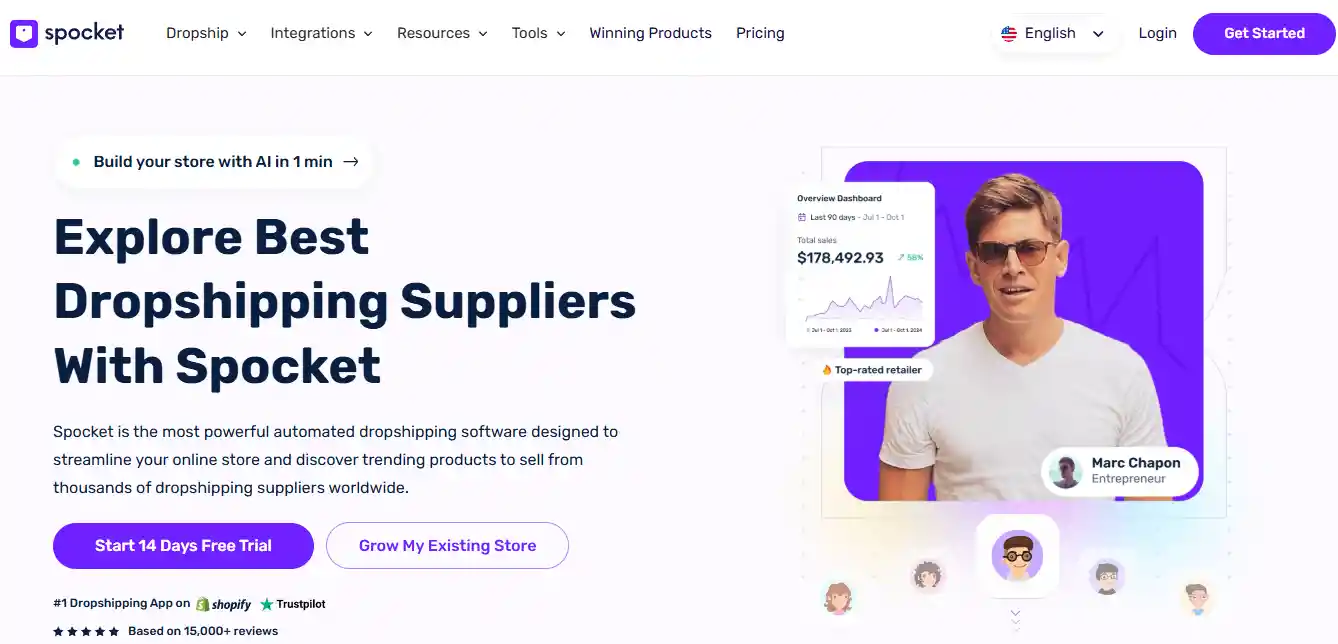
Spocket dropshipping is a model where you source products from Spocket’s marketplace of pre-vetted suppliers, mainly in the US and EU, and sync them to your online store. You can then sell these products without stocking inventory yourself. When a customer orders, the supplier ships directly to them, while you keep the profit margin between your sale price and the supplier’s price.
You can connect Spocket to platforms like Wix or WooCommerce, browse catalog categories, and add products to your store with pre-filled details that you can edit. Product pages usually include images, descriptions, shipping times, and wholesale pricing, so you don’t start from a blank page. You will still need to customize the copy and angles so your store doesn’t look like every other generic dropshipping site.
You’ll know you’re using Spocket well when you:
- Filter for US/EU suppliers if you want faster shipping and fewer customs issues.
- Check product reviews, order samples, and verify quality before scaling.
- Adjust pricing so you cover product cost, shipping, fees, and still keep profit.
Spocket is not a magic button that prints money. You still have to bring traffic, choose good offers, and communicate clearly with buyers. But if you want access to a catalog of products with shorter shipping times compared to many China-based sources, Spocket can make the logistics side more manageable while you focus on marketing and customer relationships. It also offers 24/7 VIP customer support, branded invoicing, and one-click product imports.
5 Best Dropshipping Tips for Beginners
If you need a starting point that doesn’t feel vague or fluffy, use these five dropshipping tips as your base.
1. Pick a Niche With Intent, Not Just Hype
Everyone sees the same TikTok “winning products” and rushes in. You could do better by choosing a niche where:
- People have specific problems or hobbies they already spend money on.
- You can create content around the products (how-tos, comparisons, demos).
- You’re willing to stay interested for more than a month.
You don’t need a completely original idea. You just need a focused niche where you can stand out with better positioning, content, or offers.
2. Start Simple With One Main Store
You might feel tempted to launch multiple stores at once, but you will spread yourself thin. Start with one store, one niche, and a small set of products. This keeps your testing cleaner and your learning faster.
You can:
- Test 3–5 products in the same niche.
- Watch which ones get clicks, add-to-carts, and sales.
- Drop the duds early and double down on the ones that get traction.
Once you understand what converts and why, you’ll have a clearer sense of what to add next instead of guessing blindly.
3. Treat Product Pages Like Sales Pages
If you notice, many dropshippers copy the supplier’s description and wonder why no one buys. A product page is a sales page. It has one job: move a visitor from “maybe” to “I’m buying this.”
On each product page, make sure you:
- Explain who the product is for and what problem it solves.
- Use clear bullet points for benefits and important specs.
- Add real photos or lifestyle images if possible, not just mockups.
- Include size guides, materials, or usage details that reduce hesitation.
You don’t have to write like a poet. You just have to make it easy for someone to say yes.
4. Start With Organic Traffic, Then Layer Paid
You can build early momentum with organic channels: short-form video on TikTok, Reels, or YouTube Shorts; niche blogs; or simple review and comparison content. This takes time, but it builds trust and brings traffic that you’re not paying for per click.
Once you see which content gets clicks, comments, and sales, you will have better data for paid ads. Instead of running random campaigns, you’ll base your ads on creatives and angles that already worked organically. This makes your ad spend less wasteful.
5. Track Your Numbers and Make Decisions From Data
You don’t have to become a full-time analyst, but you should know your basics:
- Cost of goods + shipping
- Ad spend
- Conversion rate
- Average order value (AOV)
- Profit per order
If a product sells but leaves you with $1 profit after all costs, it’s not worth scaling. On the other hand, a product with fewer sales but a healthier margin may be a better long-term bet. You should check your numbers weekly and adjust prices, ad budgets, and product focus based on real results, not hope.
Conclusion
Dropshipping in 2026 isn’t dead, and it isn’t a guaranteed gold rush either. It sits in the middle. You can still build a real business, but only if you approach it with patience, clear thinking, and a willingness to learn the unglamorous parts: customer support, product research, and basic analytics.
If you use dropshipping as a way to test ideas, understand your audience, and eventually build stronger offers or even your own branded products, it can be a smart entry point into online commerce. You don’t need massive capital to start, but you will need focus and consistency.
If you stick with it, treat customers well, and keep refining what you sell and how you sell it, dropshipping can be more than a side experiment. It can be your bridge into a long-term online business that grows with you. Also, check out our dropshipping earnings guide for newbies.