How to Set Up a Referral Program for Your Online Store in 2026
Word-of-mouth drives sales. This guide shows you how to set up customer referral programs for online stores to lower costs and increase loyalty.

Happy customers are your best marketers. They already trust your products, and their recommendations carry more weight than any ad you could run. A customer referral program for online stores turns that goodwill into a predictable growth engine. Instead of spending more on ads, you reward your current buyers for bringing in new ones. It creates a system where everyone wins: your existing customers get a perk, their friends discover a brand they can trust, and you gain high-quality sales without the lower cost of traditional marketing.

If you are ready to build this channel, you need more than a simple idea. You need a clear plan. This guide walks you through how to set up a referral program for your online store, from the types of programs that work to the tools you will need and the real-world examples you can learn from.
What Is a Referral Program?
A referral program is a structured marketing tactic where a business rewards its existing customers for introducing new people to the brand. It formalizes word-of-mouth. You give your loyal customers a unique link or code. When they share it with friends and those friends make a purchase, both sides get a reward.
Understanding the referral program meaning is simple: it is a way to automate and scale personal recommendations. It differs from affiliate marketing because it relies on personal connections rather than influencers. The goal is to motivate your happy audience to become brand advocates. By implementing the right referral program options for dropshipping stores, you turn a one-time buyer into a repeat promoter. If you are using dropshipping as your business model, a referral program helps you build trust faster because new customers come from someone they already know.
How Do Referral Programs Work
To set up a successful system, you first need to understand the mechanics behind it. A referral program does not run on magic; it runs on a clear loop of actions and reactions.
The Core Referral Loop
Every referral program follows the same basic journey. A customer makes a purchase and has a great experience. After the sale, you invite them to join the program. They sign up and receive a unique code or link. They share this link with a friend via text, email, or social media. The friend clicks the link, visits your store, and makes a purchase. Once that sale is confirmed, your software automatically rewards the original customer.
This loop relies on timing. You want to ask for the referral when the customer is happiest, usually right after they receive their order. If you automate customer referrals, you do not have to manually track anything. The software handles the link generation and the reward fulfillment for you. For store owners using Spocket, automating referrals works especially well because the order and delivery process is already streamlined, giving you more time to focus on promotion.
The Technology Behind the Scenes
You cannot run a scalable program with spreadsheets. The backend of a referral program website relies on unique tracking codes. Each advocate gets a specific ID embedded in their link. This ensures that when a friend clicks it, the system knows exactly who to credit for the sale.
Modern tools also offer AI-powered referrals to predict who your best advocates will be. Instead of inviting everyone, the software analyzes purchase history and engagement to suggest who is most likely to share. This keeps your acquisition costs low and your conversion rates high. When you combine AI-powered referrals with reliable product sourcing, you create a stable foundation for growth.
Types of Referral Programs for Online Stores
Not all programs look the same. The structure you choose depends on your products, your margins, and what motivates your customers.
Incentivized Referral Programs
This is the most common type. Here, you offer a reward to motivate sharing. Usually, this is a double-sided incentive, meaning both the referrer and the friend get something. For example, if a friend uses a code, the friend gets 20% off, and the referrer gets a $20 store credit.
Incentives work because they remove the friction of trying a new brand. The friend feels like they are getting a deal, and the referrer feels like they are doing a favor. You can use store credit to ensure the reward brings the advocate back to your store for another purchase, increasing their lifetime value. This model works well for stores that sell trending dropshipping products because the perceived value of the reward stays high.
Direct and Reputation-Based Referrals
Direct referrals happen when a customer is so happy that they share your brand without any promised reward. It is the purest form of word-of-mouth, but it is hard to scale on its own.
Reputation-based referrals are a step further. They happen when your brand is so well-known that people recommend it even if they haven’t bought from you yet. While these are excellent goals to aim for, they usually require years of consistent branding. For most growing businesses, an incentivized model is the fastest way to see results.
Tiered Referral Structures
To keep your best advocates sharing, you can use a tiered referral structure. This motivates customers to refer more than once. Instead of a flat $10 reward for every sale, you offer escalating rewards.
For instance, "Refer 1 friend, get 10% off. Refer 3 friends, get a free product. Refer 5 friends, get VIP early access." This turns sharing into a game. It encourages your top promoters to keep going. This structure works especially well for consumable goods or subscription services where customers make repeat purchases.
How to Start a Referral Program for Your Online Store
Building a program involves more than picking a software. You need to design the experience so customers actually want to participate.
Define Your Goal and KPIs
Before you choose a referral program app, ask yourself what success looks like. Are you just trying to get more traffic? Or do you want to increase average order value? You need a clear goal.
If your goal is to acquire high-value customers, set a minimum purchase requirement. If you want to grow your email list, you might reward the referrer for just a signup. Your goal dictates your incentive. Set KPIs like the referral rate (percentage of orders from referrals) and the participation rate (percentage of customers who share). You cannot improve what you do not measure.
Identify Your Best Promoters
Not every customer will refer. If you invite everyone, you waste rewards on people who never intended to share. You need to find your true advocates.
Look for customers who have bought multiple times or left positive reviews. Check your Net Promoter Score (NPS) data; customers who rate you a 9 or 10 are prime candidates. You can also look for behavioral signals like high average order value. Once you identify them, tag them in your CRM. Send them a personal invite to join the program first. This builds momentum and ensures your early results look strong.
Craft Your Incentive Structure
The reward is the engine of your program. You need to pick a reward that feels exciting but does not kill your margins. Referral programs to earn money can include cash, but store credit is often better for ecommerce because it guarantees a second sale.
Test different formats. A two-sided incentive (both parties get a discount) typically converts better than a one-sided one. Make the value clear. Instead of "Get a reward," say "Give $15, Get $15." The math needs to be visible to the customer instantly. Also, consider using a referral program template email to test different subject lines and see which offer drives the most clicks.
Integrate with Your Fulfillment Setup
A referral program works best when the product experience matches the promise. If you are running a dropshipping business, your customers expect fast shipping and quality items. Using a reliable supplier ensures that the people your advocates refer actually get a great experience. Print-on-demand products, for example, can be a great fit for referral programs because they often come with high perceived value and allow for unique designs.
Best Tools for Creating Online Store Referral Programs
Choosing the right software automates the tracking and prevents fraud. Here are the best tools for referrals to consider for 2026.
1. ReferralCandy
ReferralCandy is built specifically for ecommerce brands. It integrates with most major platforms like Shopify and WooCommerce. You can set up automated reward emails and create tiered rewards to incentivize multiple referrals. It starts with a free trial, and paid plans begin around $49 per month plus a small commission per referral.
2. Friendbuy
Friendbuy offers highly customizable widgets that match your branding. It is great for retailers and SaaS businesses. You can A/B test different rewards to see what works best. Friendbuy provides advanced analytics to track the customer journey. Pricing is customized based on your needs, but they offer a free trial to start.
3. Yotpo Loyalty & Referrals
Yotpo integrates loyalty and referrals into one platform. It allows you to manage points, VIP tiers, and referrals from a single dashboard. You can configure referral rules, such as requiring a minimum spend before a reward is issued. Yotpo offers a free plan for basic setups, with paid plans starting at higher tiers for advanced features like fraud prevention.
4. Mention Me
Mention Me focuses on dual-sided incentives and deep analytics. It is known for helping brands identify their "super-advocates." The platform emphasizes sharing that feels natural to the customer experience. Pricing is quote-based, but they offer a demo to show how it works.
5. LoyaltyLion
LoyaltyLion is a data-driven loyalty platform that includes robust referral features. It allows you to trigger referral requests based on specific actions, like posting a review. It integrates deeply with email marketing tools to personalize the referral ask. Pricing starts with a free plan for new stores, scaling up as your revenue grows.
6. Social Snowball
Social Snowball is a modern tool designed for Shopify merchants. It focuses on simplifying the sharing process and is highly rated for its user-friendly interface. It allows you to create unique affiliate links for customers and influencers alike. Pricing usually starts with a monthly subscription after a free trial period.
Benefits of Customer Referral Programs for Online Stores
Why should you prioritize this channel over other forms of advertising? The data shows that referrals create better customers.
- Lower Customer Acquisition Cost (CAC): Traditional ads cost money whether they convert or not. With referrals, you only pay when a sale happens. This makes it a cost-efficient channel compared to global advertising platforms. Be sure to get to know Customer Acquisition costs by industry.
- Higher Lifetime Value (LTV): Customers who come from a referral trust you from day one. They are less likely to churn and often spend more over time. Studies show referred customers have 37% higher retention rates.
- Increased Trust: 88% of consumers trust recommendations from friends over any other form of advertising. You bypass the skepticism that comes with paid ads.
- Qualified Leads: Referred customers often share the same demographics and interests as your existing best customers. This way to grow your sales strategy ensures you are reaching people who are already predisposed to like your products.
Referral Program Examples for Online Stores
Real-world referral program examples show you what is possible. Let’s look at brands that launched or optimized eCommerce referral programs recently and see what you can copy.
1. Gozney: Turning Customers Into Champions
Gozney, the premium pizza oven brand, knew their product was a conversation starter. People naturally showed off their ovens to friends. To scale this, they used Mention Me integrated with their CRM.
- Before: They relied on organic word-of-mouth. It was strong but inconsistent.
- How they launched: They identified "customer champions" using data. They then incentivized these champions with rewards for referring friends. They used automated post-purchase flows to ask for shares at the moment of peak excitement.
- After: This structured approach contributed to a 24% year-over-year increase in retention. They turned natural product buzz into a measurable revenue stream.
2. HexClad: The Tiered Approach
HexClad, a hybrid cookware brand, wanted to minimize their cost per acquisition while boosting loyalty. They launched a tiered referral program using Rivo.
- Before: They were spending heavily on paid ads to acquire customers.
- How they launched: They created a tiered referral structure where rewards got better the more you referred. They integrated this with Klaviyo to send personalized emails based on referral activity.
- After: In just 90 days, the program drove $450,000 in new referral revenue. They also saw a 17% lift in average order value from customers who were referred.
3. Happy Mammoth: Milestone Bonuses
Happy Mammoth, a health and wellness brand, uses a "Share Happiness" program structured around milestone bonuses.
- How they launched: They designed a structure where customers unlock exclusive rewards by hitting targets. Refer 5 friends, get a free product. Refer 10 friends, get a $500 store credit.
- What worked: The escalating rewards kept customers engaged. It gave them a clear goal to work toward, turning occasional sharing into a dedicated effort. The total program offers up to $700 in value, motivating high-volume advocates.
Mistakes to Avoid When Starting a Customer Referral Program for Your Online Store
Even a great idea can fail if you overlook the details. Here are the common traps to avoid.
- Setting the Wrong Incentive: If your reward is too low, no one will share. If it is too high, you will lose money. Avoid one-sided rewards that only benefit the referrer. The friend needs a reason to click the link. Unbalanced rewards kill conversion rates.
- Making It Hard to Share: Do not hide the referral link in a menu buried in your site. If a customer has to click five times to find their code, they will give up. The flow must be optimized for mobile and offer one-click sharing options for social media.
- Neglecting Promotion: You cannot just install an app and expect customers to find it. You need to promote it everywhere: in order confirmation emails, on your homepage, and in your social bios. If you do not talk about it, customers will not use it.
- Ignoring Fraud: Without verification, people can create fake accounts to refer themselves. This drains your budget. Use a referral program app with built-in fraud detection, such as email verification or IP tracking, to protect your margins.
Conclusion
Building a referral program is one of the smartest investments you can make in 2026.
Start by defining your goals. Identify your most loyal customers. Choose a reward structure that excites them without breaking your budget. Then, select a referral program app that automates the heavy lifting. Remember to promote the program consistently across your emails and website. When you set up the system correctly, your customers become your marketing team, and your sales grow naturally.
If you are ready to build a referral program for your online store, consider how your fulfillment plays a role. You can explore referral strategies to integrate with your ecommerce model today. And if you want to turn your customers into brand ambassadors even further, check out Spocket's affiliate marketing program to see how you can build a broader network of promoters.
Start your dropshipping business today
How to Set Up a Referral Program for Online Stores FAQs
What is the difference between a loyalty program and a referral program?
A loyalty program rewards customers for their own purchases, encouraging them to buy more often. A customer referral program for online stores rewards customers for bringing in new customers. While they work well together, a referral program focuses specifically on acquisition, whereas loyalty focuses on retention.
How much should I spend on referral rewards?
You should base your reward on your profit margins and customer lifetime value (LTV). A common benchmark is to offer 10% to 20% of the average order value to the referrer. Ensure the total cost of the reward is less than your cost per acquisition (CPA) from paid ads to make the program profitable.
Can I run a referral program for a dropshipping store?
Yes. Referral program options for dropshipping stores work exactly the same as for any ecommerce store. You need to ensure your margins allow for the reward. If you are using Spocket, you can set up automated emails to invite customers to refer after they receive their product.
How do I track referrals without software?
Manually tracking referrals is not sustainable for any business beyond a very small scale. You need a referral program app to generate unique codes, track conversions, and automate reward delivery. Without automation, you risk missing sales and frustrating your best customers.
What are the best referral ideas for online stores?
Good referral ideas for online stores go beyond discounts. You can offer free products, early access to new collections, or charitable donations in the customer’s name. The best ideas align with your brand values. If you sell sustainable goods, plant a tree for every referral.
How do I attract more referrals?
To attract more referrals, you must ask at the right moment. The best time to ask is right after a purchase when the customer is most excited. Also, make your referral widget visible on the customer account page and send reminder emails. The easier you make it to share, the more referrals you will get.


Launch your dropshipping business now!
Start free trial.avif)


Related blogs
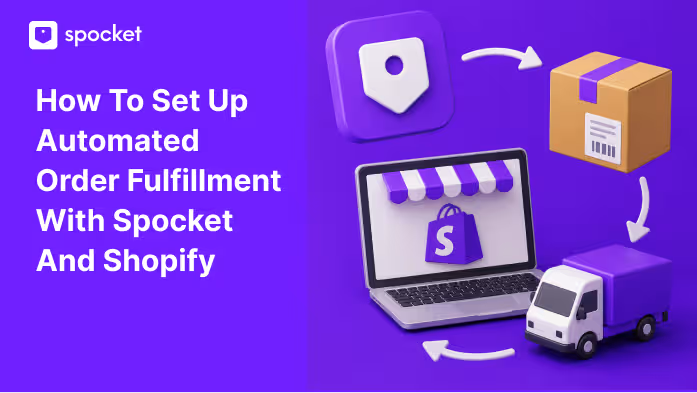
How to Set Up Automated Order Fulfillment With Spocket and Shopify
Set up a smoother Shopify dropshipping workflow with Spocket by connecting your store, importing products, processing orders, syncing tracking, and reducing manual fulfillment tasks.

How to Open a Business Bank Account for Your Dropshipping Store
Set up your dropshipping finances the right way with a dedicated business bank account built for payouts, supplier payments, taxes, and long-term store growth.
Spocket vs Dropified: Which Tool Is Better for Multi-Store Scaling?
Compare Spocket and Dropified for multi-store dropshipping, supplier quality, automation, fulfillment, product sourcing, and scaling across ecommerce platforms.