How to Sell on Meesho
Learn how to sell on Meesho without inventory. Curate products, price strategically, and build your customer base through WhatsApp and Instagram.


Want to earn money without managing inventory or shipping? Selling on Meesho puts that power in your hands. You don't need a website, warehouse, or huge upfront capital. You pick products from verified suppliers, share them on WhatsApp and Instagram, and pocket the profits. Thousands of sellers are already doing this, pulling in anywhere from a few hundred to thousands of dollars monthly.
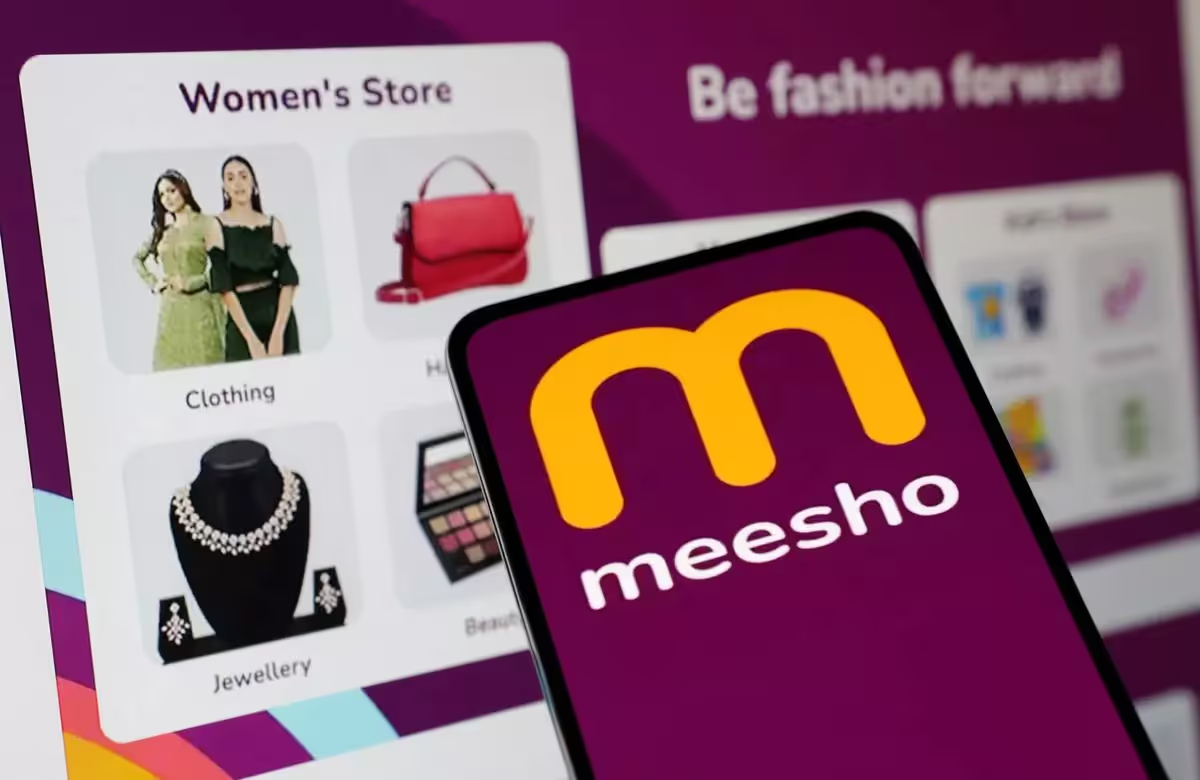
If you're curious whether selling on Meesho is profitable or just another money-making claim, we're about to break down exactly how it works, what it takes, and whether it's right for you.
What is Meesho?
Meesho is an Indian social commerce platform that lets you sell products directly to customers through WhatsApp, Instagram, and Facebook. Think of it as a marketplace where you don't need to hold inventory—you partner with suppliers, list their products, and earn a commission on every sale. The platform has exploded in India, but it's opening doors for sellers worldwide, including the US, who want to tap into a massive customer base without the overhead of traditional e-commerce.
The beauty of Meesho is its simplicity. You don't need a fancy website, coding skills, or mountains of capital to start. You log in, browse supplier catalogs, pick products that fit your niche, and share them with customers through your social media channels. When someone buys, Meesho handles the order, the supplier ships it, and you pocket the profit margin.
Benefits of Selling on Meesho Online
Meesho opens up income streams that don't demand much upfront investment. Here are the real reasons sellers choose this platform:
- No inventory burden - You never buy stock or manage warehouses. The supplier handles everything from fulfillment to shipping, which means you focus only on selling.
- Low startup costs - Creating a seller account is free. You don't pay listing fees or monthly subscriptions to get started, making it ideal if you're testing the waters before going all-in.
- Work from anywhere - Whether you're in New York or Los Angeles, you can run your Meesho business from your laptop or phone. Social selling works on your schedule, not a fixed location.
- Commission-based earnings - You set your margin. The more you sell, the more you earn. There's no ceiling on how much profit you can make if you're good at marketing.
- Pre-vetted suppliers - Meesho does the legwork of finding and vetting suppliers, so you're not hunting for sketchy wholesalers or dealing with import headaches yourself.
- Social media integration - Your business lives where your customers already hang out—Instagram, Facebook, WhatsApp. No need to drive traffic to a separate site.
Is selling on Meesho profitable? Yes. Sellers consistently report earnings between $500 to $5,000 monthly once they build a solid customer base, depending on how much time they invest and the product categories they choose.
How to Register as a Meesho Seller?
Getting started takes maybe 10 minutes. Here's what happens:
- Download the app or go to the website - Meesho works on iOS, Android, and desktop. Most sellers prefer the app since it's built for mobile-first selling.
- Tap "Become a Supplier" - This option sits right on the home screen. You're officially telling Meesho you want to sell.
- Enter your phone number - Meesho sends an OTP (one-time password) to verify it's really you. This becomes your primary login.
- Complete your profile - Fill in basic information: your name, email, address, and bank details. Meesho uses these details to transfer your earnings.
- Choose your shop name - Pick something catchy and relevant to what you'll sell. You can't change it later, so think it through.
- Set up your payment method - Link your bank account. This is where Meesho deposits your commissions.
- Get verified - Meesho may ask for documents depending on your location and product category. This usually takes 1-3 days.
That's it. You're officially a Meesho seller ready to list products.
Types of Products You Can Sell on Meesho
Meesho's catalog spans nearly every consumer category imaginable. What matters is picking categories where you can actually move volume.
Fashion and Apparel
Clothing dominates Meesho's sales. T-shirts, kurtas, sarees, jeans, and ethnic wear sell consistently. US sellers tap into this by marketing Indian fashion to diaspora communities and anyone interested in ethnic or fusion clothing. The markup is typically 30-50%.
Beauty and Personal Care
Skincare, makeup, hair care, and wellness products are huge sellers. Indian beauty brands like Faces Canada and Nykaa products do well. Margins here are solid—often 40-60%—because the cost of goods is low and the repeat purchase rate is high.
Home and Kitchen
Bed linens, cookware, utensils, decorative items, and kitchenware move steadily. These items have decent margins (25-40%) and appeal to everyone setting up homes or upgrading their kitchens.
Electronics and Accessories
Phone cases, chargers, power banks, cables, and tech accessories are steady sellers. Competition is tighter here, but the volume can be massive. Margins run 20-35%.
Footwear
Shoes, slippers, sandals, and ethnic footwear attract consistent buyers. Margins typically sit between 25-45%, and shipping is straightforward.
Jewelry and Accessories
Earrings, necklaces, bracelets, rings, and bangles are perennial bestsellers on Meesho. These items have high margins (50-100%) and low shipping costs, making them incredibly profitable per unit.
Sports and Fitness
Yoga mats, dumbbells, resistance bands, and fitness gear appeal to health-conscious buyers. Margins range from 20-40%.
Baby and Kids Products
Baby clothes, toys, and nursery items attract parents. Margins are competitive (30-50%) but parents spend freely on their kids.
The top 5 best selling products on Meesho shift seasonally, but historically, fashion items, jewelry, and beauty products consistently rank at the top. Your job is finding the subcategory where you can offer something slightly different—maybe better quality, better pricing, or a niche angle that stands out.
How to Sell on Meesho Online
This is where the real selling happens. Let's walk through the actual process of moving products and making money.
Understanding the Meesho Supplier Panel
When you log into your Meesho seller account, you're entering the supplier panel—your command center. This is where you browse catalogs, add products to your shop, and track orders. The supplier panel shows you real-time inventory, sales data, and customer messages. Get comfortable with this interface because you'll live in it.
The panel breaks down into sections: My Products, Orders, Earnings, and Customer Chats. My Products is where you curate what you're selling. Orders shows incoming sales. Earnings tracks your commissions. Customer Chats is where you handle buyer questions—Meesho routes all communications through the app to keep everything organized.
Finding the Right Products
Browsing the supplier panel alone isn't enough to succeed. You need a strategy. Start by looking at what sells. Sort products by popularity or recent sales. See what has thousands of orders—that's your signal that something's working. But don't just copy what everyone else is doing. That's the fastest way to get lost in competition.
Instead, think about your angle. Are you targeting college students? Busy professionals? New parents? Maybe you're going after the Indian diaspora in the US looking for authentic products. Once you know your audience, filter products that appeal to them.
Check the supplier rating too. Higher-rated suppliers mean fewer returns and happier customers. A 4.5+ rating is solid. Below 4, and you're risking quality issues that tank your reputation.
Product pricing varies wildly. The same item might be offered by multiple suppliers at different costs. Compare supplier prices, factor in your margin goal, and calculate what you need to charge customers to make it worth your time. If you're only making $1-2 per sale after commission, that's volume play. If you're making $5-10 per sale, you're sitting pretty.
Curating Your Shop
Your shop is your brand. It's not random inventory—it's a collection that makes sense together. If you're selling jewelry, don't suddenly add kitchen utensils. Curate around a theme. This does two things: it helps customers find related items to buy (increasing order value) and it positions you as someone who knows what they're doing, not just a middleman.
Add 50-100 products to start. More than that gets overwhelming to manage if you're new. Less than that, and customers feel like you don't have much to offer. As you grow and understand what sells, you can expand.
Write proper product titles and descriptions. Don't just copy from the supplier. Your title should be clear and include relevant keywords. Instead of "Earrings," write "Oxidized Silver Jhumka Earrings with Pearl Drop." Instead of "T-Shirt," try "Oversized Cotton Graphic T-Shirt for Men." These details help customers find your products when they search.
Use high-quality product images. Meesho lets you upload multiple images per product. Take advantage. Show the product from different angles, on a person if possible, and include size/color details. Blurry or poorly lit photos kill conversions.
Pricing Strategy
Your price is where profit lives. Meesho shows both the supplier price and your selling price. The gap is your commission. You decide that gap.
Let's say a supplier sells a jewelry piece for $5. You could price it at $8 (40% margin), $10 (100% margin), or $12 (140% margin). Higher margins are tempting, but they can kill sales volume. Lower margins move more units but require volume to hit income goals.
The sweet spot depends on your category and competition. Fashion usually tolerates 30-50% markups. Jewelry can handle 50-100%. Electronics are tighter—20-35%. Test different price points and watch what sells. You might find that dropping your price by $1 suddenly triples your sales, making up for the lower margin with volume.
Keep an eye on other sellers too. If everyone's pricing an item at $12 and you price it at $15, customers will buy from them. Competitive pricing matters, but so does standing out—maybe with better descriptions or faster shipping claims.
Building Your Customer Base
Meesho gives you social selling tools because that's where your customers live. You share products on WhatsApp, Instagram, Facebook, and TikTok. Each platform works differently.
On WhatsApp, you send product catalogs to your contacts. It's direct and personal. WhatsApp messages have high open rates—people read them unlike emails. Build a WhatsApp business group or contact list of interested buyers. Share new products weekly, celebrate wins ("Just shipped 10 orders today!"), and stay top-of-mind.
On Instagram, you use Meesho's shoppable catalog feature. Your followers tap a product link and buy directly from your shop within Instagram. Stories work particularly well—post product photos daily with links to drive traffic. Reels (short videos) are golden for engagement. Showing yourself unboxing products or styling items generates trust.
On Facebook, you can create a shop or post products to groups. Facebook groups dedicated to Indian products, expat communities, or specific interests (like Indian fashion or beauty) are goldmines. Join relevant groups, share products when appropriate, and build community.
On TikTok, short, punchy videos work. Show products in action, do quick hauls, share customer testimonials, or create trending sounds with your products as the hook.
The real power comes from building an audience that trusts you. This takes time. Post consistently, respond to comments and messages quickly, and be genuine. People buy from people they like, not faceless catalogs.
Managing Orders and Customer Service
When someone buys, Meesho notifies both you and the supplier. The supplier ships directly to the customer. Your job is checking in, answering questions, and handling complaints.
Response time matters enormously. Meesho shows customers your response rate. Hit back within a few hours, even if it's just to say you'll get them an answer soon. Slow responses tank your rating and lose sales.
Most questions are straightforward: "Do you have this in blue?" or "How long does shipping take?" Answer honestly and helpfully. If you don't know, say so and find out. Customers appreciate honesty more than quick excuses.
Handling returns and complaints professionally is non-negotiable. Someone receives a defective item or something doesn't fit? Offer a refund or replacement without argument. Yes, it costs you. But a happy customer leaves great reviews and buys again. A burned customer leaves a bad review and tells 10 people.
Meesho tracks your ratings based on this. Higher ratings get your products shown more prominently. This is worth protecting.
Scaling Your Sales
Once you've sold your first 100 units and understand what works, it's time to scale. This means making more money without proportionally increasing work.
- Use Meesho's promotional tools. Offering discounts on specific products drives sales volume. A $2 discount might seem small, but if it doubles your sales, you're ahead. Test different discount levels and track which moves the most units.
- Cross-selling matters. If someone buys earrings, suggest matching necklaces or bangles. Bundle complementary products and offer a small discount for buying multiple items. This raises your average order value and makes shipping costs worth less per unit sold.
- Expand your product range gradually. Once you've mastered jewelry, add a complementary category like ethnic clothing. This keeps your existing audience engaged and attracts new customers interested in the broader range.
- Keep scaling your audience. The more people in your contact lists and social media followers, the more potential buyers you have. Organic growth through word-of-mouth and social posts is free. Paid social ads (Facebook, Instagram) can accelerate it if you're ready to invest.
Conclusion
Selling on Meesho is genuinely profitable if you approach it strategically. You're not building a traditional business—you're leveraging a platform and a supplier network to move products and earn commissions. The barrier to entry is nonexistent, but the barrier to making real money is effort and consistency.
Pick categories you understand or are willing to learn. Curate your shop thoughtfully. Price competitively but profitably. Build an audience through honest, regular engagement. Handle customers like they matter because they do. The sellers making $2,000+ monthly on Meesho are doing all of this. They're not special—they're just systematic.
Is selling on Meesho profitable? Yes. But profit comes from execution, not from joining the platform and hoping. If you're ready to put in the work, Meesho gives you the tools and the marketplace. Everything else depends on you. If you’re looking for an alternative to Meesho when it comes to dropshipping online, try Spocket!
How to Sell on Meesho FAQs
How to Sell On Meesho without GST?
In India, GST (Goods and Services Tax) is mandatory above certain sales thresholds. For US sellers, GST doesn't apply directly because you're based outside India. However, if you're selling through Meesho's Indian marketplace to Indian customers, you may need to register depending on your annual turnover.
Here's what actually matters: Meesho allows sellers without GST registration to operate on the platform if their sales are below GST thresholds. You can sell on Meesho without GST as long as your monthly turnover stays low (under $1,500 USD equivalent roughly). Once you cross that, Meesho will ask for GST documentation.
The workaround many sellers use is partnering with a local supplier who already has GST registration. You sell their products under their GST umbrella, taking a commission. This keeps you compliant without needing your own registration.
How to Sell On Meesho Gold?
Meesho Gold is Meesho's premium supplier tier. It's a badge that appears on your shop and product listings, signaling to customers that you're a trusted, verified seller. Getting the Gold status requires meeting specific criteria set by Meesho.
To sell on Meesho Gold, you need to maintain high ratings (usually 4.5+), process orders consistently, respond to customers quickly, and have zero unresolved complaints. It's not automatic—Meesho reviews your performance over 30-90 days and then invites you to upgrade if you qualify.
The benefits are real. Meesho Gold sellers get better product visibility, appear higher in search results, and enjoy customer trust because of the badge. Sales volume often jumps 30-50% after achieving Gold status.
How to Sell On Meesho in Hindi?
Meesho's app and website support multiple languages, including Hindi. You can write product descriptions and titles in Hindi if that's your preference. This helps you reach customers who prefer shopping in their native language.
To sell on Meesho in Hindi, simply switch your app language to Hindi in settings. When you write product titles and descriptions, use Hindi text. Meesho's system translates some content automatically, but hand-written descriptions in Hindi perform better because they're more authentic and trustworthy to Hindi-speaking customers.
Many Indian sellers targeting Hindi-speaking audiences in the US (diaspora communities) find that using Hindi descriptions increases conversion rates. It's a small personalization that works.
How to Sell On Meesho Mall?
Meesho Mall is a premium section within Meesho where only selected sellers can list products. It's essentially Meesho's curated marketplace for higher-quality, vetted brands.
To sell on Meesho Mall, you need to apply through your seller panel. Meesho reviews your shop, ratings, product quality, and customer feedback. Sellers with Gold status or near-Gold performance are more likely to be approved. There's typically a vetting process that takes 2-4 weeks.
Once you're in Meesho Mall, your products get featured in a premium section, driving higher-quality customer traffic. Conversion rates are usually better here because customers actively choose to browse the curated section, showing they're serious buyers. This how to sell on Meesho Mall works—it's about proving you're reliable first, then gaining access.


Launch your dropshipping business now!
Start free trial


Blogs relacionados

Amazon Seller Flex: o guia completo de como funciona, requisitos, custos e configuração
Saiba o que é o Amazon Seller Flex, como funciona, principais benefícios, requisitos de elegibilidade, custos e como se juntar ao Seller Flex para melhorar a velocidade de entrega e as vendas.


Como se tornar viral no TikTok: dicas comprovadas
Aprenda a se tornar viral no TikTok usando estratégias comprovadas: ganchos, tendências, horários de postagem, SEO do TikTok e táticas de engajamento que acionam o algoritmo.


O que é marca pessoal e por que ela é importante
Aprenda o significado da marca pessoal, o que é uma marca pessoal e por que a marca pessoal é importante. Descubra etapas simples para criar uma marca pessoal forte.